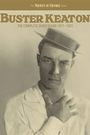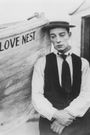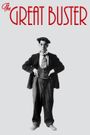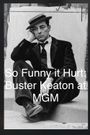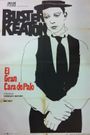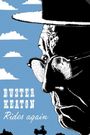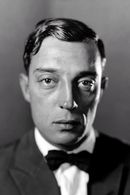
Joseph Frank Keaton was born on October 4, 1895, in Piqua, Kansas, to Joe Keaton and Myra Keaton, Vaudevillian comedians with a popular, ever-changing variety act. This gave his son an eclectic and interesting upbringing. As a child, he traveled with a medicine show that included illusionist Harry Houdini, a family friend. Keaton himself verified the origin of his nickname "Buster", given to him by Houdini when the 3-year-old fell down a flight of stairs and Houdini picked him up, dusted him off, and told the boy's father Joe that the fall was "a buster". Savvy showman Joe Keaton liked the nickname, which has stuck for over one century.
At age 4, Keaton had already begun acting with his parents on the stage. Their act soon gained the reputation as one of the roughest in the country for their wild, physical onstage antics. It was normal for Joe to throw Buster around the stage and participate in elaborate, dangerous stunts to the awe of audiences. After several years on the Vaudeville circuit, "The Three Keatons" toured until Keaton had to break up the act because of his father's increasing alcohol dependence, making him a show business veteran by age 21.
While looking for work in New York, he had a chance run-in with wildly-successful film star and director Roscoe 'Fatty' Arbuckle, who invited him to be in his upcoming short The Butcher Boy (1917). This appearance launched Keaton's film career and spawned a friendship that lasted until Arbuckle's sudden death in 1933. By 1920, after making several successful shorts together, Arbuckle moved on to features, and Keaton inherited his studio, allowing him the opportunity to begin producing his own films.
By September 1921, tragedy touched Arbuckle's life by way of a scandal, where he was tried three times for the murder of Virginia Rapp. Although he was not guilty of the charges, and never convicted, he was unable to regain his status, and the viewing public would no longer tolerate his presence in film. Keaton stood by his friend and mentor through out the incident, supporting him financially, finding him directorial work, even risking his own budding reputation offering to testify on Arbuckle's behalf.
In 1921, Keaton also married his first wife, Natalie Talmadge under unusual circumstance that have never been fully clarified. Popular conjecture states that he was encouraged by Joseph M. Schenck to marry into the powerful Talmadge dynasty, that he himself was already a part of. The union bore Keaton two sons.
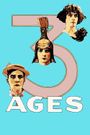
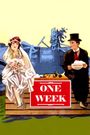
Keaton's independent shorts soon became too limiting for the growing star, and after a string of popular films like One Week (1920),The Boat (1921) and Cops (1922),Keaton made the transition into feature films. His first feature, Three Ages (1923),was produced similarly to his short films, and was the dawning of a new era in comedic cinema, where it became apparent to Keaton that he had to put more focus on the story lines and characterization.
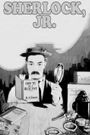
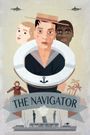
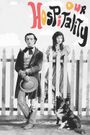
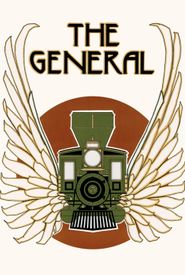
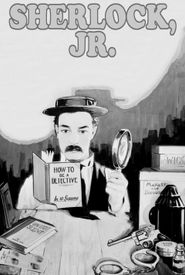
At the height of his popularity, he was making two features a year, and followed Ages with Our Hospitality (1923),The Navigator (1924) and The General (1926),the latter two he regarded as his best films. The most renowned of Keaton's comedies is Sherlock Jr. (1924),which used cutting edge special effects that received mixed reviews as critics and audiences alike had never seen anything like it, and did not know what to make of it. Modern day film scholars liken the story and effects to Christopher Nolan Inception (2010),for its high level concept and ground-breaking execution.
Keaton's Civil War epic The General (1926) kept up his momentum when he gave audiences the biggest and most expensive sequence ever seen in film at the time. At its climax, a bridge collapses while a train is passing over it, sending the train into a river. This wowed audiences, but did little for its long-term financial success. Audiences did not respond well to the film, disliking the higher level of drama over comedy, and the main character being a Confederate soldier.
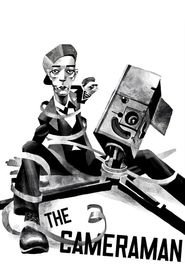
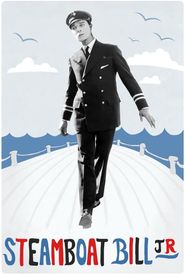
After a few more silent features, including College (1927) and Steamboat Bill, Jr. (1928),Keaton was informed that his contract had been sold to MGM, by brother-in-law and producer Joseph M. Schenck. Keaton regarded the incident as the worst professional mistake he ever made, as it sent his career, legacy, and personal life into a vicious downward spiral for many years. His first film with MGM was The Cameraman (1928),which is regarded as one of his best silent comedies, but the release signified the loss of control Keaton would incur, never again regaining his film-making independence.
He made one more silent film at