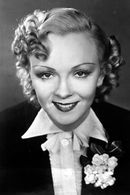

Esther Muir, a statuesque American comedienne, started her career as a New York model, debuting in the chorus line of the 1922 Broadway production of the "Greenwich Village Follies" straight out of high school with little to no theatrical training. Despite her lack of experience, she caught the eye of industry professionals, including Charles Ruggles, with whom she co-starred in "Battling Butler". This marked her first role as a comic foil, a position she would occupy frequently throughout her career.
In 1929, Muir delivered an acclaimed performance in the Broadway production of "My Girl Friday", followed by further work in musical comedy for Lew Leslie's International Revue alongside notable performers like Gertrude Lawrence. During this time, she met noted choreographer Busby Berkeley, who had worked on the dance numbers for the show, backstage with columnist Walter Winchell. Muir subsequently married Berkeley and accompanied him to Hollywood after he was signed by producer Samuel Goldwyn. However, the union was short-lived, with Muir later claiming that Berkeley needed a mother more than a wife.
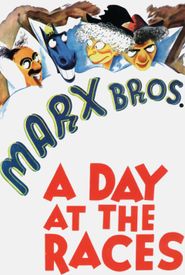
While in Hollywood, Muir began acting in feature films and two-reel comedies, soon becoming typecast as the obliging comic foil to Bert Wheeler and Robert Woolsey in the spoof "So This Is Africa" (1933) and to Fanny Brice in "The Great Ziegfeld" (1936). She often received good wisecracking lines to deliver, and her most pivotal role was as the seductive Flo in "A Day at the Races" (1937),touring the part on stage before filming.
In one of the Marx Brothers' most anarchic scenes, Muir's Flo gets her comeuppance by being covered in paste and wallpaper, with stills suggesting that the Marxes took Muir's pasting further than was played out in the released film version. Muir took the pranks in good humour and was a willing participant in the antics played on set.
Groucho Marx captioned a picture in "The Groucho Phile" (p. 144) with: "Esther struck oil while running her fingers through my hair. She retired from films as a result". In fact, Muir stuck around for another five years, confined to bit parts in major films or supporting roles for Republic and other Poverty Row studios. She was one of the few free-lance actresses in Hollywood, reluctant to commit to long-term contracts. Having lost the lucrative role of Belle Watling in "Gone with the Wind" (1939) to Ona Munson, Muir became increasingly disheartened and eventually retired from films in 1943, beginning a new career as a real estate developer in Southern California.