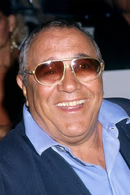
Sergio Corbucci was born on December 6, 1926, in Rome, Italy. He initially pursued a career in business, but after earning a college degree in economics, he shifted his focus to the world of cinema. Corbucci began his career as a film critic, writing for the Italian film journal "Schermi del Mondo" and later for the US Army newspaper "Stars and Stripes" during World War II.
Corbucci made his directorial debut with Salvate mia figlia in 1951 and quickly established himself as a capable and efficient filmmaker. He became known for his ability to create large-scale action sequences on a minimal budget, which led to him being in demand as an assistant director. Corbucci claims to have conceived the idea for the "spaghetti western" while filming with a second unit in Spain for Sergio Leone on The Last Days of Pompeii in 1959. Seeing the Spanish landscape, which resembled Mexico or Texas, Corbucci suggested making an American Wild West-themed film in Spain.
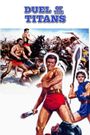
Corbucci directed his first western in Spain before Leone's A Fistful of Dollars was released in 1964. He went on to direct a variety of films in different genres, including Totò, Peppino e... la dolce vita, a slapstick comedy spoof of Federico Fellini's La Dolce Vita, and Duel of the Titans. He also wrote screenplays for several seminal horror films, including Castle of Blood, starring Barbara Steele.
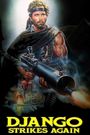
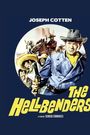
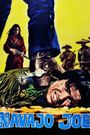
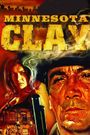
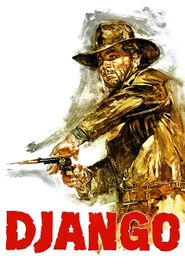
However, it was Corbucci's Massacre at Grand Canyon in 1964, which he directed under the pseudonym Stanley Corbett with Albert Band, that marked the beginning of his career as a director of spaghetti westerns. His subsequent films, such as Minnesota Clay, Django, Ringo and His Golden Pistol, The Hellbenders, and Navajo Joe, solidified his position as one of the most influential Italian directors of the spaghetti western genre.
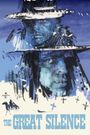
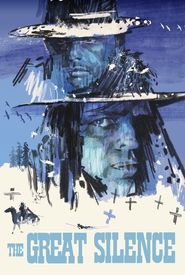
Corbucci's next film, The Great Silence, referred to as an "anti-Western," showcased his innovative storytelling and use of location. His subsequent westerns, including The Mercenary, The Specialists, and Compañeros, continued to push the boundaries of the genre and explore political themes.
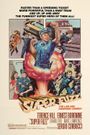
During the 1970s, Corbucci made three more spaghetti westerns, including Sonny and Jed, What Am I Doing in the Middle of a Revolution?, and The White, the Yellow, and the Black. After the spaghetti western era ended, Corbucci turned his focus to comedy, finding success with films like The Con Artists and Super Fuzz.
Sergio Corbucci passed away on December 1, 1990, at the age of 63, due to a sudden heart attack. His last film was the made-for-Italian-TV-movie Donne armate, which was completed a few months before his death. Corbucci is remembered for revolutionizing the spaghetti western genre, which was popularized by his friend Sergio Leone.