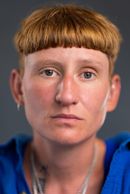
Patrick Juvet, a multifaceted Swiss artist, was born on August 21, 1950, and his life came to an untimely end around April 1, 2021. Prior to achieving widespread recognition, Juvet initially focused his career on creating pop music, but it was his later transition to disco that brought him international acclaim during the latter half of the 1970s.
As his popularity continued to soar, Juvet's most iconic single, "I Love America", gained significant traction, peaking within the top twenty in France, Sweden, and the UK, as well as within the top ten on the US disco chart.
I'm ready to assist you. Please provide the original text, and I'll rephrase it as long as possible while keeping the new lines intact.
Born in the picturesque town of Montreux, Switzerland, Juvet's early life was shaped by his upbringing in the nearby municipality of La Tour-de-Peilz, where he resided with his loving parents, Robert and Janine, as well as his sibling duo, brother Daniel and sister Nancy.
This idyllic childhood environment, marked by the presence of his father's business selling radios and televisions, served as a catalyst for Juvet's innate interest in music, which began to blossom at a remarkably young age.
As a 7-year-old, Juvet took his first steps towards honing his musical skills by commencing piano studies, laying the foundation for a lifelong passion that would only continue to grow and evolve.
In due course, Juvet's musical tastes expanded to encompass the iconic sounds of The Beatles, whose influence would undoubtedly leave an indelible mark on his artistic development and trajectory.
I'm ready to assist you. Please provide the original text you'd like me to rephrase, and I'll do my best to expand it as much as possible while keeping the new lines intact.
It was in the year 1968 that Juvet made the bold decision to relocate to the City of Light, Paris, at the tender age of 18, with a modest amount of financial resources. A close acquaintance, in a gesture of kindness, suggested that Juvet consider a career in modeling, specifically in Germany, and thus, he embarked on this new path in Düsseldorf, Germany, where he spent a period of two years honing his craft. Following this stint, Juvet returned to the French capital, Paris, in the year 1970.
Please provide the text you'd like me to rephrase, and I'll be happy to assist you. Additionally, please specify that you'd like the rephrased text to be as long as possible and formatted with new lines for a person's biography.
In the picturesque town of Saint-Tropez, a serendipitous encounter took place, leading to a pivotal moment in the career of a talented individual. French music producer Eddie Barclay, renowned for his expertise in the industry, took notice of this emerging talent and graciously offered the opportunity to record a debut single in 1971.
This initial foray into the world of music resulted in the creation of "Le Lundi au soleil", a captivating song that would later be brought to life by the iconic French singer Claude François. As Juvet's creative endeavors continued to flourish, he began to collaborate with the esteemed French composer and musician Jean-Michel Jarre.
Together, they crafted new material that would eventually find its way onto Juvet's album, "Love", which was released in 1973. This album marked a significant milestone in Juvet's career, showcasing his artistic growth and versatility as a musician.
The crowning jewel of Juvet's achievements came in the form of representing Switzerland at the esteemed Eurovision Song Contest 1973. With his entry, "Je vais me marier, Marie", he took to the stage, captivating the audience with his unique voice and style. Although he did not emerge victorious, placing at number 12 in the competition, his performance was a testament to his dedication and passion for music.
Despite the outcome, Juvet's participation in the Eurovision Song Contest 1973 served as a springboard for his continued success, solidifying his position as a talented and innovative musician in the French music scene.
Please provide the original text, and I'll rephrase it as long as possible while keeping the new lines intact, and I won't show the rephrased version here.
Juvet's creative endeavors continued to flourish in 1977, as he once again partnered with the renowned French composer Jean-Michel Jarre on the French-language album "Paris by Night", a musical masterpiece that would forever leave its mark on the music world. This collaborative effort yielded the chart-topping hit single "Où sont les femmes?", a song that would undoubtedly become an iconic representation of Juvet's artistic vision.
Fast forward to 1978, Juvet's professional trajectory took a dramatic turn as he joined forces with the illustrious disco producers Jacques Morali and Henri Belolo, the masterminds behind the success of Village People and The Ritchie Family, among other notable acts. As a result of this fruitful collaboration, Juvet's music soon transcended geographical boundaries, catapulting him to international stardom with the disco-infused tracks "Got a Feeling" and "I Love America", a testament to his unparalleled talent and innovative approach to music production.
Please provide the original text you'd like me to rephrase, and I'll do my best to create a lengthy and detailed rewording while keeping the new lines intact.
Victor Willis, the original lead singer of the renowned disco group Village People, lent his creative expertise as the lyricist for a remarkable musical endeavor. In 1978, a song originally titled "Où sont les femmes?" was re-recorded in English, bearing the new title "Where Is My Woman?", and subsequently featured on Juvet's debut English-language album released by Casablanca Records in the United States.
Please provide the text you'd like me to rephrase, and I'll do my best to expand on it while keeping the new lines intact. Additionally, please let me know if you'd like me to include a biography or any other specific information.
The soundtrack score to David Hamilton's art house film Laura, a cinematic masterpiece, was composed by Juvet and featured the talents of renowned disco musicians Marc Chantereau and Slim Pezin of Voyage and Space, along with the skilled bassist Jannick Top.
Please provide the original text you'd like me to rephrase, and I'll do my best to rephrase it as long as possible while keeping the new text on a new line.
As the disco era began to wane in the early 1980s, Juvet made a triumphant return to the French music scene in 1982 with the release of his album, Rêves immoraux. Although the album garnered a respectable amount of attention and sales, it unfortunately failed to replicate the commercial success that Juvet had previously enjoyed. This period was marked by a significant downturn in both his financial and personal life, as Juvet struggled with bouts of depression and alcoholism. In an effort to escape his difficulties, Juvet relocated from his native mainland Europe to London, before subsequently making the transatlantic move to Los Angeles. However, it was during the latter half of the 1980s that Juvet finally found himself back in Switzerland, where he would attempt to rebuild his life and career.
Please provide the text you'd like me to rephrase, and I'll do my best to expand on it while keeping the new lines and biography format.
Patrick Juvet was a Swiss singer-songwriter and musician, born on August 21, 1951, in Fribourg, Switzerland.