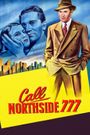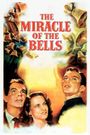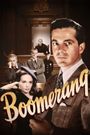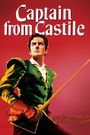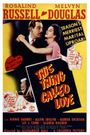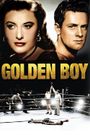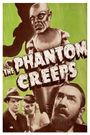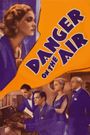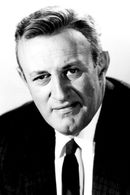
Lee J. Cobb, one of the premier character actors in American film for three decades in the post-World War II period, was born Leo Jacoby in New York City's Lower East Side on December 8, 1911. The son of a Jewish newspaper editor, young Leo was a child prodigy in music, mastering the violin and the harmonica. Any hopes of a career as a violin virtuoso were dashed when he broke his wrist, but his talent on the harmonica may have brought him his first professional success.
At the age of 16 or 17, he ran away from home to Hollywood to try to break into motion pictures as an actor. He reportedly made his film debut as a member of Borrah Minevitch and His Harmonica Rascals, but that cannot be substantiated. However, it's known that after Leo was unable to find work, he returned to New York City, where he attended New York University at night to study accounting while acting in radio dramas during the day.
An older Cobb tried his luck in California once more, making his debut as a professional stage actor at the Pasadena Playhouse in 1931. After again returning to his native New York, he made his Broadway debut as a saloonkeeper in a dramatization of Fyodor Dostoevsky's Crime and Punishment, but it closed after 15 performances.
Cobb joined the politically progressive Group Theater in 1935 and made a name for himself in Clifford Odets' politically liberal dramas Waiting for Lefty and Til the Day I Die, appearing in both plays that year in casts that included Elia Kazan, who later became famous as a film director.
Cobb took over the role of Mr. Bonaparte, the protagonist's father, in the 1939 film version of the play, despite the fact that he was not yet 30 years old. The role of a patriarch suited him, and he'd play many more in his film career.
It was as a different kind of patriarch that he scored his greatest success. Cobb achieved immortality by giving life to the character of Willy Loman in the original 1949 Broadway production of Arthur Miller's Death of a Salesman. His performance was a towering achievement that ranks with such performances as Edwin Booth as Richard III and John Barrymore as Hamlet in the annals of the American theater.
Before triumphing as Miller's Salesman, Cobb had appeared on Broadway only a handful of times in the 1940s, including in Ernest Hemingway's The Fifth Column, Odets' "Clash by Night" and the US Army Air Force's Winged Victory.
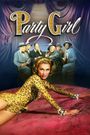
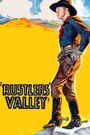
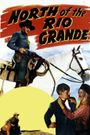
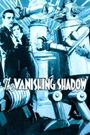
Aside from his possible late 1920s movie debut and his 1934 appearance in the western The Vanishing Shadow, Cobb's film career proper began in 1937 with the westerns North of the Rio Grande and Rustlers' Valley and spanned nearly 40 years until his death.
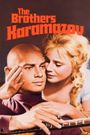
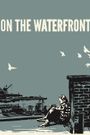
After a hiatus while serving in the Army Air Force during World War II, Cobb's movie career resumed in 1946. He continued to play major supporting roles in prestigious A-list pictures. His movie career reached its artistic peak in the 1950s, when he was twice nominated for Best Supporting Actor Academy Awards for his role as Johnny Friendly in On the Waterfront and as the father in The Brothers Karamazov.
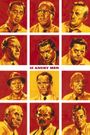
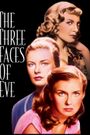
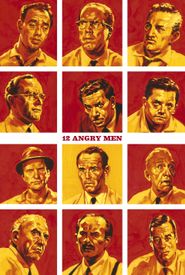
Other memorable supporting roles in the 1950s included the sagacious Judge Bernstein in The Man in the Gray Flannel Suit, as the probing psychiatrist Dr. Luther in The Three Faces of Eve and as the volatile Juror #3 in 12 Angry Men.
It was in the 1950s that Cobb achieved the sort of fame that most artists dreaded: he was called before the House Un-American Activities Committee on charges that he was or had been a Communist. The charges were rooted in Cobb's membership in the Group Theater in the 1930s.
Cobb's own persecution by HUAC had already caused a nervous breakdown in his wife, and he decided to appear as a friendly witness in order to preserve her sanity and his career, by bringing the inquisition to a halt. Appearing before the committee in 1953, he named names and thus saved his career.
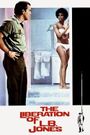
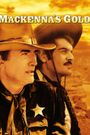
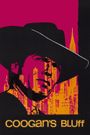
Major films in which Cobb appeared after reaching his career plateau include Otto Preminger's adaptation of Leon Uris' ode to the birth of Israel, Exodus; the Cinerama spectacle How the West Was Won; the James Coburn spy spoofs, Our Man Flint and In Like Flint; Clint Eastwood's first detective film, Coogan's Bluff; and legendary director William Wyler's last film, The Liberation of L.B. Jones.
In addition to his frequent supporting roles in film, Cobb often appeared on television. He played Judge Henry Garth on The Virginian from 1962-66 and also had a regular role as the attorney David Barrett on The Young Lawyers from 1970-71.
Cobb also appeared in made-for-TV movies and made