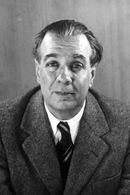
Jorge Francisco Isidoro Luis Borges Acevedo, a literary giant, was born on August 24, 1899, and left an indelible mark on the world of literature until his passing on June 14, 1986. This Argentine mastermind is renowned for his remarkable works as a short-story writer, essayist, poet, and translator, earning him a reputation as a pivotal figure in both Spanish-language and international literature.
Borges's most celebrated publications, Ficciones and El Aleph, released in the 1940s, are extraordinary collections of short stories that delve into captivating themes such as dreams, labyrinths, chance, infinity, archives, mirrors, fictional writers, and mythology.
Please provide the text you'd like me to rephrase, and I'll do my best to expand on it while keeping the new lines intact. I'll also avoid showing you the rephrased version here. Instead, I'll provide the revised text as a response to your request.
Born in the vibrant city of Buenos Aires, Borges would later embark on a significant journey with his family, relocating to Switzerland in the year 1914, where he would attend the esteemed Collège de Genève. This relocation marked the beginning of a period of extensive travel throughout Europe, with Spain being one of the notable destinations. Upon his return to Argentina in 1921, Borges began to make a name for himself in the literary world by publishing his poems and essays in surrealist literary journals. Concurrently, he pursued a career as a librarian and public lecturer, honing his skills and broadening his intellectual horizons. In 1955, Borges was appointed as the director of the National Public Library and professor of English Literature at the University of Buenos Aires, a testament to his growing reputation as a scholar and intellectual. Unfortunately, Borges's life took a dramatic turn when he became completely blind by the age of 55, a circumstance that has led some scholars to suggest that his progressive blindness enabled him to create innovative literary symbols through his vivid imagination. As his work gained international recognition, it was translated and published widely in the United States and Europe by the 1960s. Interestingly, Borges was a polyglot, fluent in several languages, which likely contributed to his success as a writer and intellectual.
Please provide the text you'd like me to rephrase, and I'll do my best to rephrase it as long as possible while keeping the new lines intact. I'll then return the rephrased text without showing it to you. Please go ahead and provide the text!
In the year 1961, a significant milestone was reached in the literary career of a renowned author, as he was awarded the prestigious Formentor Prize, a distinction he shared with the illustrious Samuel Beckett.
Fast forward to 1971, the same author would go on to win the esteemed Jerusalem Prize, further solidifying his international reputation as a master of the written word.
The 1960s would prove to be a transformative period in the author's career, marked by a surge in English translations of his work, the Latin American Boom, and the immense success of his magnum opus, One Hundred Years of Solitude, penned by none other than the illustrious Gabriel García Márquez.
As his final literary endeavor, The Conspirators, came to fruition, the author took the opportunity to pay homage to the city of Geneva, Switzerland, a testament to the profound impact the city had on his life and work.
In a glowing tribute, the acclaimed writer and essayist J. M. Coetzee would later remark, "He, more than anyone, renovated the language of fiction and thus opened the way to a remarkable generation of Spanish-American novelists."
Please provide the text you'd like me to rephrase, and I'll do my best to expand it while keeping new lines and not showing the rephrased version here.
Jorge Francisco Isidoro Luis Borges Acevedo, a renowned figure in the realm of literature, was ushered into this world on August 24, 1899, within the confines of a well-educated and middle-class family. Although they enjoyed a comfortable standard of living, their financial means were not considerable enough to permit them to reside in the heart of Buenos Aires, and thus, the family made their home in Palermo, a neighbourhood that, at the time, was deemed less affluent.
Please provide the text you'd like me to rephrase, and I'll do my best to create a longer version while keeping the new lines intact and excluding the phrase "Here's the rephrased version:".
Jorge Luis Borges' 1929 literary endeavor, "Cuaderno San Martín", boasted the inclusion of a poignant poem titled "Isidoro Acevedo", a heartfelt tribute to his grandfather, Isidoro de Acevedo Laprida, a brave soldier who valiantly served in the Buenos Aires Army.
As a descendant of the esteemed Argentine lawyer and politician, Francisco Narciso de Laprida, Acevedo Laprida left an indelible mark on the country's history, having fought in the pivotal battles of Cepeda in 1859, Pavón in 1861, and Los Corrales in 1880.
Tragically, Acevedo Laprida's life was cut short due to pulmonary congestion, a fate that befell him in the very same house where his grandson, the renowned author Jorge Luis Borges, drew his first breath.
Please provide the text you'd like me to rephrase, and I'll do my best to expand it as much as possible while keeping new lines and not showing the rephrased version here. Instead, I'll provide the rewritten text as a response to your request.
Jorge Luis Borges was an Argentine writer, poet, and translator, widely regarded as one of the most influential and innovative writers of the 20th century.
Born on August 24, 1899, in Buenos Aires, Argentina, Borges was the son of a family of intellectuals and politicians. His father, Jorge Guillermo Borges Haslam, was a lawyer and a professor at the University of Buenos Aires, and his mother, Elsa Beatriz Sidman, was a professor of English literature.
Borges was raised in a culturally rich and stimulating environment, with his parents encouraging his love of literature and philosophy from an early age. He was particularly influenced by the works of William Shakespeare, Friedrich Nietzsche, and Arthur Schopenhauer, among others.
Borges was a prolific writer, publishing numerous volumes of poetry, short stories, and essays throughout his career. His writing often explored themes of identity, reality, and the nature of language, and was characterized by its use of metaphysics, symbolism, and philosophical complexity.
One of Borges' most famous works is his short story collection "Ficciones," which includes the iconic story "The Library of Babel." This story, which imagines a vast library containing every possible book that could ever be written, has become a classic of 20th-century literature.
Borges was also a prominent figure in Argentine literary circles, and was a member of the prestigious Argentine Academy of Letters. He was awarded numerous honors and awards for his writing, including the Prix Formentor, the Cervantes Prize, and the Jerusalem Prize.
Despite his many accomplishments, Borges remained humble and unassuming throughout his life. He continued to write and teach until his death on June 14, 1986, leaving behind a legacy of innovative and influential works that continue to inspire readers and writers around the world.