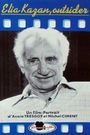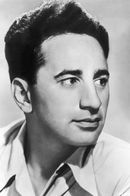

Elias Kazantzoglou, later known as Elia Kazan, was born on September 7, 1909, in Constantinople, Ottoman Empire, which is now Istanbul, Turkey. He would go on to make a significant impact in the world of film and theater, earning widespread recognition for his creative stage direction and ability to draw out exceptional performances from his actors.
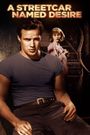
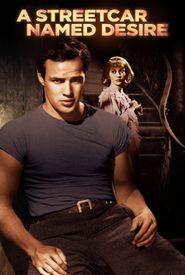
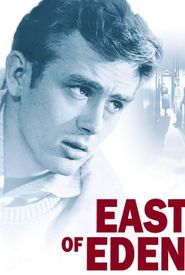
Throughout his illustrious career, Kazan directed a total of 21 actors who received Oscar nominations, resulting in a staggering nine wins. His filmography boasts a string of successful movies, including A Streetcar Named Desire, On the Waterfront, and East of Eden, which have all become classics in their own right.
Kazan's films often tackled personal and social issues that were close to his heart. He would only take on projects that resonated with him on a deep level, saying, "I don't move unless I have some empathy with the basic theme." His first issue-driven film was Gentleman's Agreement, which dealt with anti-Semitism in America and received widespread critical acclaim.
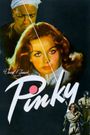
The film was followed by Pinky, a groundbreaking movie that addressed racial prejudice against black people, and A Streetcar Named Desire, an adaptation of the stage play that introduced Marlon Brando to the world. On the Waterfront, a film about union corruption on the New York harbor waterfront, and East of Eden, an adaptation of John Steinbeck's novel, were also major hits.
However, Kazan's career was not without controversy. In 1952, he testified before the House Committee on Un-American Activities, which led to a backlash from many of his liberal friends and colleagues. His testimony had a devastating impact on the careers of several of his former acting colleagues, including Morris Carnovsky and Art Smith, as well as the work of playwright Clifford Odets.
Kazan later justified his decision by saying that he took the "more tolerable of two alternatives that were either way painful and wrong." However, his anti-Communist testimony continued to cause controversy for many years to come. When Kazan was awarded an honorary Oscar in 1999, dozens of actors chose not to applaud, and 250 demonstrators picketed the event.
Despite the controversy, Kazan's influence on the world of film cannot be overstated. He was a true master of his craft, and his provocative, issue-driven subjects helped shape the course of the 1950s and 1960s. Director Stanley Kubrick, who was a great admirer of Kazan's work, called him "without question, the best director we have in America, and capable of performing miracles with the actors he uses."
Elia Kazan passed away on September 28, 2003, at the age of 94, leaving behind a legacy that continues to be celebrated to this day. Martin Scorsese co-directed the documentary film A Letter to Elia in 2010 as a personal tribute to Kazan, a testament to the enduring impact he had on the world of film.