Roy Badran's life story unfolded on April 19, 1983, in the vibrant and resilient city of Beirut, Lebanon, a metropolis that would forever hold a special place in his heart due to the profound impact of the Lebanese civil war.
Roy Badran's early years were characterized by a distinctive and deeply influential encounter with his neighbor, the proprietor of a video rental store, who would periodically shut down his business and gift the young boy a bounty of VHS tapes. This recurring act of kindness, repeated over time, granted Roy access to a diverse and extensive array of films, showcasing the remarkable creations of innovative filmmakers such as Ingmar Bergman, Andrei Tarkovsky, Federico Fellini, and Sergei Eisenstein.
The life of Roy Badran was marked by a series of noteworthy events, with his high school graduation serving as a pivotal moment that sparked his creative pursuits.
Following this milestone, Badran embarked on an ambitious project, penning and directing an occult Christian play titled "Saint Simon is Dead!". This production was notable for its innovative two-level stage design, which featured moving background walls, and its large cast of 40 actors.
The play's inaugural and sole performance was a resounding success, attracting an impressive 3000 attendees. However, this success was short-lived, as the church unexpectedly banned the production, a decision that likely added to the play's mystique and notoriety.
Roy Badran's foray into the realm of film school was marked by a precipitous rise to prominence among his peers, whose collective esteem was significantly bolstered by his exceptional production prowess, which ultimately culminated in the triumphant presentation of a plethora of independently produced videos to a live audience in the bustling metropolis of Beirut, thereby garnering widespread attention from both the press and esteemed critics.
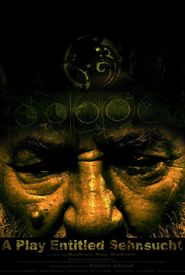
Roy Badran, a precocious and driven filmmaker, launched an extraordinary creative odyssey at the tender age of 23. He began crafting his inaugural abstract feature film, a cinematic tour de force titled "A Play Entitled Sehnsucht", which would ultimately serve as a poignant reflection of the profound self-destructive sentiments that Lebanon was grappling with during that tumultuous era.
As the cinematic tale unwinds, the central focus shifts to the mystifying persona of Bernard Zeidan, a brilliant astronomer whose life was abruptly and devastatingly truncated within the confines of a Lebanese mental institution in the year 2008. This extraordinary individual left an indelible and lasting mark on the young writer-director, Roy Badran, who drew inspiration from Zeidan's remarkable and awe-inspiring narrative.
Bernard Zeidan
Born: Unknown
Died: 2008
As a renowned astronomer, Zeidan's passion for the stars and his unwavering dedication to his craft led him down a path of discovery and exploration. His work was marked by a sense of wonder and curiosity, as he sought to unravel the secrets of the universe. Despite the challenges he faced, Zeidan's spirit remained unbroken, and his legacy continues to inspire those who knew him.
Roy Badran
Born: Unknown
Occupation: Writer-Director
As a young writer-director, Roy Badran was deeply moved by Zeidan's story and was compelled to share it with the world. Through his film, Badran aimed to capture the essence of Zeidan's remarkable life and the profound impact he had on those around him. With his creative vision and unwavering dedication, Badran has brought Zeidan's story to life, ensuring that his legacy will live on for generations to come.
In the midst of a vibrant city, Beirut, the cultural hub of Lebanon, a momentous occasion took place at the avant-premiere of a film in June 2011. It was here that a distinguished figure, Roy Badran, stood before a captivated audience, his words about to embark on a journey that would linger in the minds of those present long after the event had concluded. As he began to speak, his emotions were palpable, his tone heavy with a sense of urgency that seemed to reverberate throughout the room. The audience was entranced as Badran's voice, laced with a deep sense of frustration and anger, poured forth, his words a powerful expression of his outrage and discontent.
The words dripped with a sense of responsibility, a weighty accusation that hung in the air like a challenge, as he spoke of the devastating consequences of a conflict that had torn apart the very fabric of their society, leaving behind a trail of destruction and despair that would take countless years to repair, and yet, it was the actions, or rather, the lack thereof, of those who had the power to act, who had ultimately condemned Bernard Zeidan to a fate that was both inhumane and tragic, a confinement in an asylum that would haunt his memory for generations to come.
Badran's voice was laced with a deep sense of moral outrage as he continued to speak, his words dripping with a sense of righteous indignation that seemed to sear the air around him. His tone was one of utter disgust, as if the very idea of the nonchalant attitude being described was an affront to all that was decent and just.
"It's your nonchalance," he began, his voice low and even, but with a underlying intensity that was impossible to ignore, "your callous disregard for the suffering you inflicted, that has perpetuated a culture of denial. A denial that is not only a refusal to acknowledge the atrocities committed during that tumultuous period, but a refusal to even acknowledge the existence of those atrocities at all."
His words hung in the air, heavy with the weight of unspoken truths and unacknowledged pain. It was as if he was daring the guilty to deny the allegations, to pretend that the wounds of the past were not still raw and festering. And yet, he knew that they would, that they would continue to deny and to deflect, to shift the blame and to avoid accountability.
"But it's not just a matter of denial," he continued, his voice growing more urgent, more passionate. "It's a matter of justice, of accountability, of making sure that those who have committed such heinous crimes are held to account for their actions. It's a matter of ensuring that the wounds of the past are not only acknowledged, but also healed."
And with that, Badran's words seemed to hang in the air, a challenge to all who would listen, a call to action to confront the past and to work towards a brighter, more just future.
As the individual's words flowed forth, a palpable sense of ardor and conviction emanated from him, his voice quivering with intense emotional fervor as he levelled a scathing accusation, his tone heavy with indignation and righteous ire, "And it's this very refusal to confront the harsh realities, this stubborn and willful ignorance, that ultimately led to the tragic demise of Bernard Zeidan! The same refusal to acknowledge and address the injustices and atrocities that have been perpetrated, the same callous disregard for the suffering and pain of countless others, has resulted in a vicious cycle of violence and torment that persists to this very day, a perpetual and unbroken chain of suffering that continues to exact a terrible toll on innocent lives."
As the audience listened in rapt attention, the profundity of Badran's words struck a resounding chord, leaving a lasting impression that lingered long after the speech had concluded. The weight of his words, like a palpable force, settled heavily upon their shoulders, as they struggled to assimilate the magnitude of the situation, grappling with the weighty implications that hung in the balance. The speech, a masterful blend of persuasion and candor, served as a clarion call to action, a poignant reminder that the past, with all its attendant complexities and controversies, must be confronted head-on, and the truth, no matter how painful or uncomfortable, acknowledged, if there is to be any genuine hope for a brighter, more promising future.
Bernard Zeidan, a persona that has garnered widespread attention in recent times, has instigated considerable speculation regarding the underlying inspirations behind his intriguing character.
Roy Badran's remarkable and illustrious career in the film industry, a testament to his unwavering dedication and unrelenting passion for the art of filmmaking, spanned an impressive and remarkable five-year period, during which he had the privilege of helming the critically acclaimed production "A Play Entitled Sehnsucht", a cinematic masterpiece that left an indelible mark on the film industry's landscape, solidifying his status as a visionary and trailblazing filmmaker, whose innovative approach to storytelling and direction continues to inspire and influence generations of filmmakers, serving as a beacon of creativity and artistic excellence, and forever changing the trajectory of the film industry, leaving an enduring legacy that will be cherished and celebrated for years to come.